The Compute Bill Comes Due
The AI build-out has been financed as if compute were a fixed asset that lasts forever. Depreciation schedules suggest otherwise.
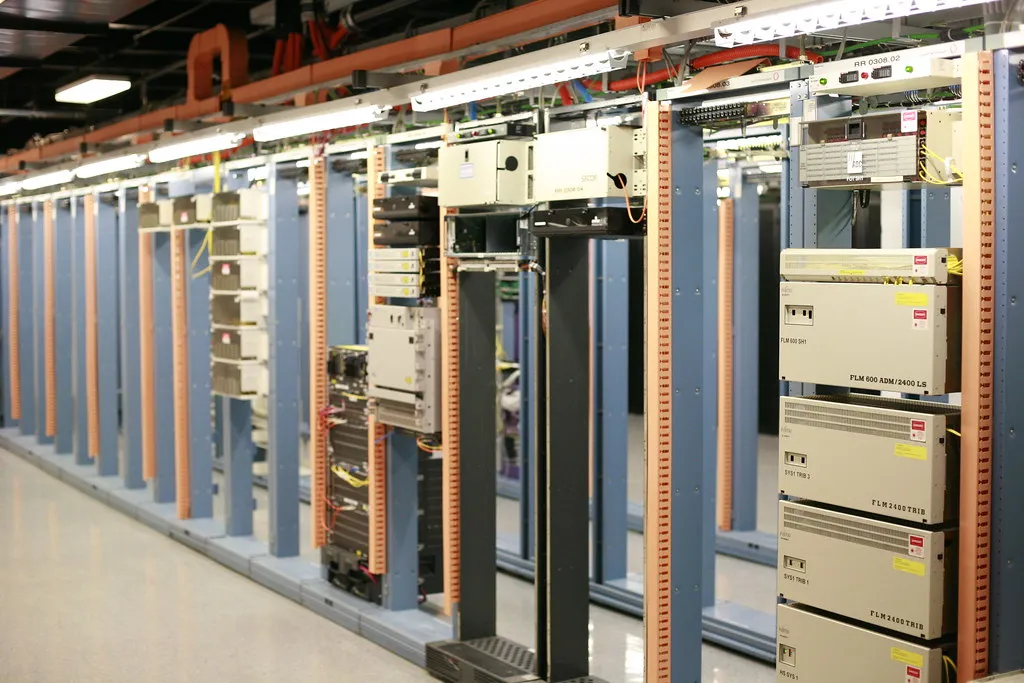
Somewhere in the footnotes of every hyperscaler’s 10-K sits a number that matters more than the headline capex figure everyone quotes on earnings calls: the useful life assumption applied to servers and networking equipment. A few years ago, most of that gear was depreciated over three years. Several large cloud providers have since stretched the assumption to five or six. Nothing about the physics of a GPU changed. What changed is that stretching the depreciation schedule quietly moves cost out of the current income statement and into the future, making today’s margins look better than the underlying economics support. That accounting choice, more than any model release, is the real story of the AI build-out — because it is the mechanism by which an industry has convinced itself that compute is a durable asset rather than a rapidly decaying one.
The scale of the spending is not in dispute. Combined capital expenditure among the largest cloud and AI infrastructure players is running at a pace that would have been unthinkable for the sector five years ago — call it several hundred billion dollars a year in aggregate once you add data centers, networking, and the power infrastructure to feed them. That capital is being raised and deployed on the premise that the resulting compute will generate revenue for long enough, and at high enough utilization, to earn back its cost. Whether that premise holds turns on three separate variables that get collapsed into one another in most public discussion: how fast the hardware actually degrades in economic (not physical) terms, how much of the installed base is actually busy at any given moment, and how much of the capex is being justified by revenue that is itself circular — vendor financing dressed up as demand.
The depreciation problem is a demand problem in disguise
Start with the hardware. A GPU cluster does not become useless in three years; it keeps computing. What erodes is its competitive value relative to the next generation, which arrives on a cadence that has, if anything, compressed rather than lengthened. A training cluster optimized two years ago for a given architecture is now running workloads at a meaningfully worse cost-per-token than newer silicon, which means the economically rational move is often to retire it early for frontier training and relegate it to inference or lower-margin work — a second life, but at a discount. This is precisely the dynamic that shaped the fiber-optic buildout of the late 1990s: the assets did not disappear, but their claim on future revenue was worth a fraction of what the original financing assumed, and the mismatch showed up first in write-downs, then in restructurings.
The accounting choice to lengthen useful-life assumptions is defensible in isolation — reasonable people can disagree about whether a GPU is a three-year or five-year asset — but it has a specific effect on reported earnings that is worth being explicit about. Extending useful life from three years to five, holding everything else constant, cuts annual depreciation expense by close to 40 percent on the affected asset base. On capital bases in the tens of billions of dollars, that is not a rounding error; it is the difference between a segment reporting a healthy operating margin and one reporting a thin one. None of this is fraudulent. It is disclosed, audited, and consistent with GAAP. But it means that a chunk of the profitability story investors are currently pricing into AI infrastructure names is an assumption about asset life rather than a fact about cash generation, and assumptions can be revised — usually downward, usually after the market has already re-rated the stock on the way up.
Utilization is the number nobody wants to publish
The second variable, utilization, is harder to pin down because almost nobody discloses it cleanly. Hyperscalers report aggregate capacity and aggregate revenue, not the fraction of provisioned GPU-hours that actually sell. Anecdotally, and this is the writer’s estimate rather than a sourced figure, a meaningful share of frontier training capacity sits idle between training runs, reserved as insurance against the next model cycle rather than earning revenue in the interim. Inference capacity tends to run hotter, but even there, providers routinely over-provision to protect against latency spikes during demand surges, which means the marginal economics of the last unit of capacity purchased are considerably worse than the average economics reported at the segment level.
The capital is being spent as though compute were land — appreciating, or at worst holding value. It behaves more like inventory with a shelf life measured in product cycles.
This matters because the entire justification for the build-out rests on an assumption of near-full utilization eventually arriving, financed today by capital markets willing to underwrite the gap. If demand for AI services grows more slowly than the capacity being installed — a scenario that looks increasingly plausible given how much of current AI revenue is inference for a relatively narrow set of high-value use cases rather than the broad enterprise adoption originally forecast — the excess capacity does not vanish. It sits on the books, depreciating on an optimistic schedule, waiting for demand that may arrive a generation late, by which point the hardware underneath it is no longer competitive.
The circularity nobody wants to price
The third variable is the one that has drawn the most scrutiny in trade press but still gets underweighted in valuation models: how much of the revenue justifying today’s capex is itself financed by the same capital doing the spending. Chip vendors have taken equity stakes in, or extended credit facilities to, some of the very companies buying their chips. Cloud providers have signed multi-year compute commitments with AI labs that are, in some cases, partially capitalized by investment from those same cloud providers. None of this is new to capital-intensive industries — vendor financing has a long history in telecom and semiconductors — but it does mean that a portion of the demand signal currently justifying continued capex is not independent, third-party demand. It is capital recycling through a short loop, and loops like that tend to unwind quickly once any single participant needs the cash back for something else.
None of this argues that the compute build-out is unjustified in aggregate — the workloads are real, and some fraction of the capacity will find durable, high-margin use. It argues for skepticism about the specific accounting and financing choices currently smoothing the picture, because those choices are the mechanism by which a genuinely uncertain bet on future demand gets reported today as a comfortably profitable one. Depreciation schedules are a claim about the future. This one is being tested in real time, and the bill, when it comes, arrives at the balance sheet rather than the model.