The Model Is Not the Moat
Frontier models are converging in capability and diverging in price toward zero. Defensibility has quietly moved somewhere else.
Every eighteen months or so, a new frontier model arrives, the benchmark charts get redrawn, and a round of commentary declares that whichever lab shipped it now owns the future. The pattern repeated through 2023 and 2024, and it is still repeating now, only with less conviction each time, because the actual market data has started to say something different. Model capability is converging across vendors — the gap between the best frontier system and the best open-weight system, measured on the tasks that matter commercially, has been shrinking rather than widening. Meanwhile the price of a unit of intelligence has been falling at a pace that would alarm any industry that hadn’t watched semiconductors do the same thing for fifty years. Call it a halving of effective inference cost every six to nine months, roughly, across the last three years — the exact cadence varies by task and provider, but the direction is not in dispute. Put those two curves together and you get an uncomfortable conclusion for anyone who has raised money on the premise that their model weights are the asset: the weights are becoming a commodity, and commodities do not carry pricing power for long.
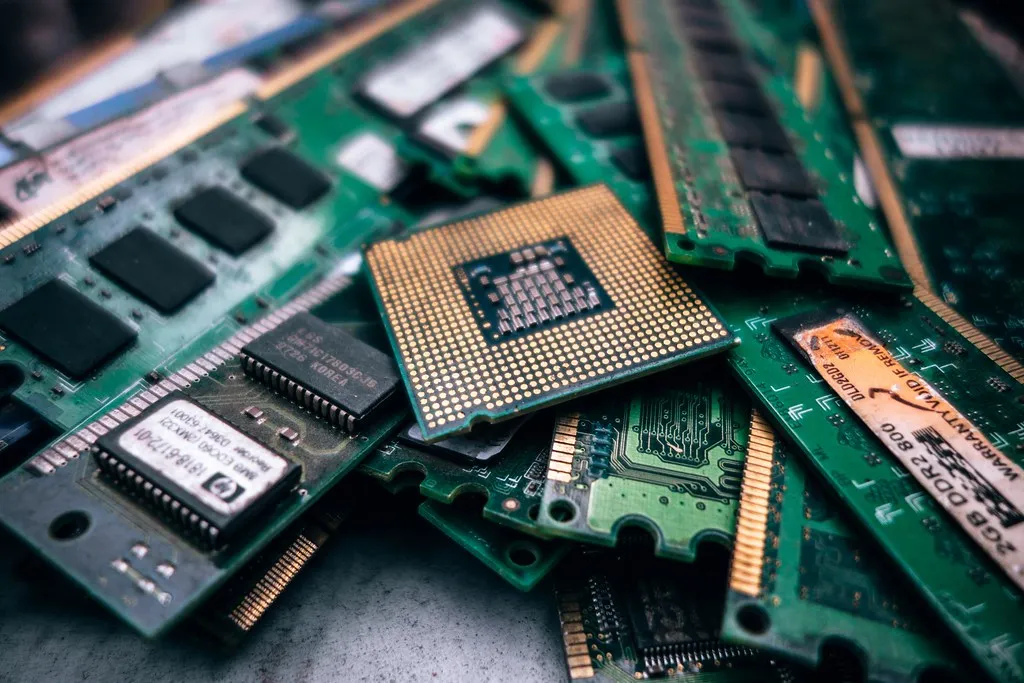
This is not an argument that models don’t matter. Somebody has to train them, and training frontier-scale systems remains extraordinarily expensive and technically hard — that barrier to entry is real and it keeps the number of serious labs small. But a barrier to entry and a moat are different things. A barrier to entry protects the club of companies that can play the game at all; a moat protects an individual company’s economics once it’s in the game, against the other members of that same club. What we’ve been watching since roughly 2024 is the club staying small while the competitive dynamics inside it start to look like commodity hardware — Qualcomm versus MediaTek, not Coca-Cola versus the rest of the beverage aisle. Prices compress toward marginal cost, feature parity arrives fast, and the company that “wins” is very often not the one with the best chip in a lab benchmark but the one that got designed into the most phones.
Where the switching cost actually lives
The useful question is not “which model is smartest” but “what would it cost a customer to leave.” For most AI-native products today, the honest answer is: less than the vendor would like, but more than a spreadsheet comparing token prices would suggest. The gap between those two numbers is where the real business sits.
Start with distribution. A company that already has the user’s attention — a browser, an operating system, an inbox, a point-of-sale terminal, a hospital’s electronic health record — can bolt a foundation model onto that surface and capture value the model’s own maker never sees. This is why the strategic posture of the incumbent platforms has been to treat frontier models as an input to be shopped for, sometimes multi-sourced, sometimes swapped quietly behind an API boundary the end user never notices. The model vendor did the expensive work; the platform captured the relationship. That asymmetry is not new — it is the same one that has always separated component suppliers from systems integrators — but AI compresses the timeline on which it plays out, because switching the underlying model genuinely is closer to a config change than a re-architecture, at least for the platform doing the switching.
Data that compounds instead of data that’s merely proprietary
The phrase “proprietary data” gets used loosely enough to be nearly meaningless, so it’s worth separating two things that look alike and aren’t. There is data that is merely private — a company’s internal documents, say — which is valuable to search over but doesn’t get more valuable with use. And there is data that compounds: usage logs that improve a ranking function, correction traces that improve a fine-tune, workflow telemetry that lets a product anticipate the next click. The first kind is a locked room; useful, but it doesn’t widen. The second kind is a flywheel, and flywheels are the closest thing left to a classical moat in this stack. A coding assistant that learns from a specific engineering org’s accept/reject patterns on its suggestions, or a claims-processing tool that has ingested a decade of a specific insurer’s adjudication decisions, is building something a rival with a better base model cannot simply replicate by fine-tuning on public data. The base model is fungible; the accumulated interaction history is not, because a competitor cannot buy access to it at any price — the only way to get it is to have been doing the job.
The model a company uses is increasingly a purchasing decision, not an identity — and purchasing decisions get renegotiated.
Workflow integration as the slow-moving fortification
The least glamorous layer of the stack may end up the most durable: the unglamorous work of sitting inside a regulated, multi-step, multi-approver business process and being the thing nobody wants to rip out. This is the old enterprise-software logic — the reason a decades-old ERP system survives long past its technical merit — applied to a new category. An AI tool that has been wired into a bank’s KYC pipeline, with its outputs mapped to specific compliance checkpoints, sign-off logs, and audit trails, is defended not by its intelligence but by the multi-quarter procurement and validation cycle required to replace it. Rip-and-replace costs in regulated workflows are measured in engineering-quarters and legal review cycles, not in API calls, and that friction is worth more to the incumbent vendor than any accuracy gap the challenger model might close. It is a moat built from bureaucracy rather than brilliance, which is exactly why it survives model cycles that would otherwise reset the competitive board.
What this means for how capital gets allocated
None of this argues against building or using frontier models — it argues against confusing access to one with a durable business. The practical implication for anyone allocating capital or attention in this space is to stop asking which lab has the best model this quarter, because that answer has an expiration date measured in months, and start asking a duller but more durable set of questions: who owns the customer relationship at the point of use, whose data compounds rather than merely accumulates, and whose product would survive a full swap of its underlying model with the customer never finding out. Companies that can answer all three tend to treat the model itself the way a car company treats its engine supplier — important, occasionally worth building in-house for strategic reasons, but never confused with the brand. The lesson of the last three years of frontier releases is not that models don’t matter. It’s that mattering and moat-having have quietly become two different things, and the industry’s rhetoric hasn’t caught up with its own price charts.